

 English
 Français
 Deutsch
 Italiano
 Português
 Русский
 Español
 简体中文
简体中文 日本語
日本語


About the author: Brian Katulis is a senior fellow and vice president of policy at the Middle East Institute.
The Biden administration is working on a deal between Israel and Saudi Arabia that could be a game changer for the Middle East. Such an opening would show just how much the tectonic plates in the region are shifting away from regional tensions, civil wars, and threats from terrorism toward a new, more promising phase of greater stability and prosperity.
An Israel-Saudi deal would also be a major achievement for the global economy. It would bring one small regional economic and technological powerhouse that punches above its weight in the world’s economy with a G-20 member that has played the dominant role in global energy markets for decades.
The big opportunity in these two countries coming together is that they could both help set the conditions for further moves toward regional economic and security integration. That would create value, economic growth, and much-needed jobs across the region. If the U.S. is actively involved in this, then it could also stand to benefit economically and commercially.
At the same time, a move in this direction comes with big risks, too, including potential blowback from retrograde forces like Iran and various terrorist networks across the region.
The China Factor
A key driver of this stepped-up U.S. engagement in the Middle East comes from outside the region: China.
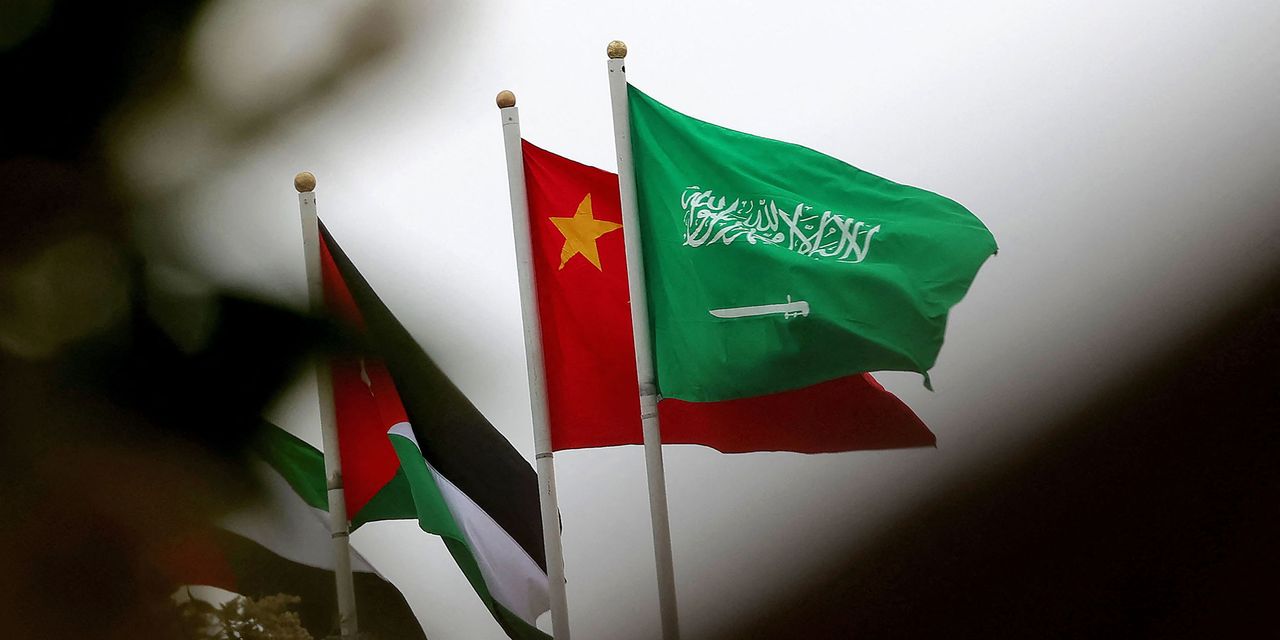
China has made progress recently at building networks of economic, energy, and technology cooperation across the region. In March, China announced that it had brokered a deal to de-escalate tensions betweenSaudi Arabia and Iran. That was a symbolic watershed for the two regional rivals. Saudi Arabia has hosted top Chinese leaders for a summit and discussions on economic ties in the past year. China has also reportedly asked Saudi Arabia to price its oil sales in the Chinese yuan, not just the U.S. dollar, another sign that China was trying to secure more turf.
The U.S. has responded by doubling down on military cooperation with its regional partners, including Israel and Saudi Arabia. They face security threats from Iran and terrorist groups such as Hezbollah and the Islamic State. China doesn’t play this security role.
Furthermore, the Biden team has sought to build what some call “minilateral” efforts like I2U2. This is a new framework that implicitly competes with China by bringing together Israel, India, the United Arab Emirates, and the U.S. to cooperate on issues such as the economy, climate change, and building regional infrastructure. In a May visit to Saudi Arabia, Biden’s national security adviser, Jake Sullivan, reportedly discussed drawing Saudi Arabia into the regional infrastructure efforts being designed in the I2U2 discussions.
This more proactive U.S. engagement with partners across the Middle East is in part designed to offer an alternative to the economic and technology policy engagement by China.
A Silver Linings Playbook for the Middle East
Beyond the competition with China, there’s another big-picture reason to watch possible movement on an Israel-Saudi normalization deal. It could mark a shift toward greater regional security and economic integration, one that moves the broader Middle East away from decades of being an arc of crisis and instability in the global economy toward becoming a key bridge linking Asia, Europe, and Africa. Greater stability would mean fewer of the oil-price shocks that have roiled the global economy before, and that would make it easier to navigate the global energy transition under way in response to climate change.
Saudi Arabia’s economy and population are much larger than Israel’s, with an annual gross domestic product of about $1 trillion and a population approaching 40 million people. Israel’s economy is about half the size of Saudi Arabia’s, and its population is only one-quarter, but it has led in key innovative economic sectors including technology and finance. That expertise would benefit Saudi Arabia’s efforts to transform and diversify its economy away from dependence on fossil fuels. If these two countries opened up cooperation, it could have positive spillover effects across the region. Regional economic integration could help reinforce stability and prosperity in the region and connect the Middle East more closely to the global trade in sectors beyond energy exports and military imports.
U.S. businesses and investors are starting to see a “silver linings playbook,” looking at the Middle East as a region of potential opportunities for economic growth. That’s clearest in venture capital and private equity, where investors are attracted by large pools of capital in sovereign-wealth funds. Putting together a more proactive U.S. policy approach that seeks opportunities with the talent and expertise in America’s private sector is a powerful combination to compete with China in the region.
Risks and the Long Road Ahead
Despite recent diplomatic discussions and efforts to de-escalate tensions, the Middle East remains a flashpoint on many fronts. Iran has never been closer to getting a nuclear weapon, and a network of groups supported by Iran undercut security across the region with terror and cyberattacks. Violence between Israelis and Palestinians can erupt at a moment’s notice and have wider reverberations across the region, which is why trying to achieve progress on the Palestinian front is essential.
In addition, U.S. diplomatic efforts to achieve progress between Israel and Saudi Arabia are impeded by trust and confidence gaps between all of the countries and their leaders. Israel’s democracy is in crisis, and its politics are highly uncertain. Furthermore, the sharp divisions inside the U.S. and concerns that next year’s elections could result in another pendulum swing in U.S. policy all reinforce existing questions about America’s overall strategic reliability.
Any possible deal between Saudi Arabia and Israel will likely take a long time to broker and implement given the many risks and uncertainties. But the potential dividends of greater stability and prosperity in the region along with broader economic ties between America and the region make it worth the effort.
Guest commentaries like this one are written by authors outside the Barron’s and MarketWatch newsroom. They reflect the perspective and opinions of the authors. Submit commentary proposals and other feedback to [email protected].
Read the full article here