

 English
 Français
 Deutsch
 Italiano
 Português
 Русский
 Español
 简体中文
简体中文 日本語
日本語

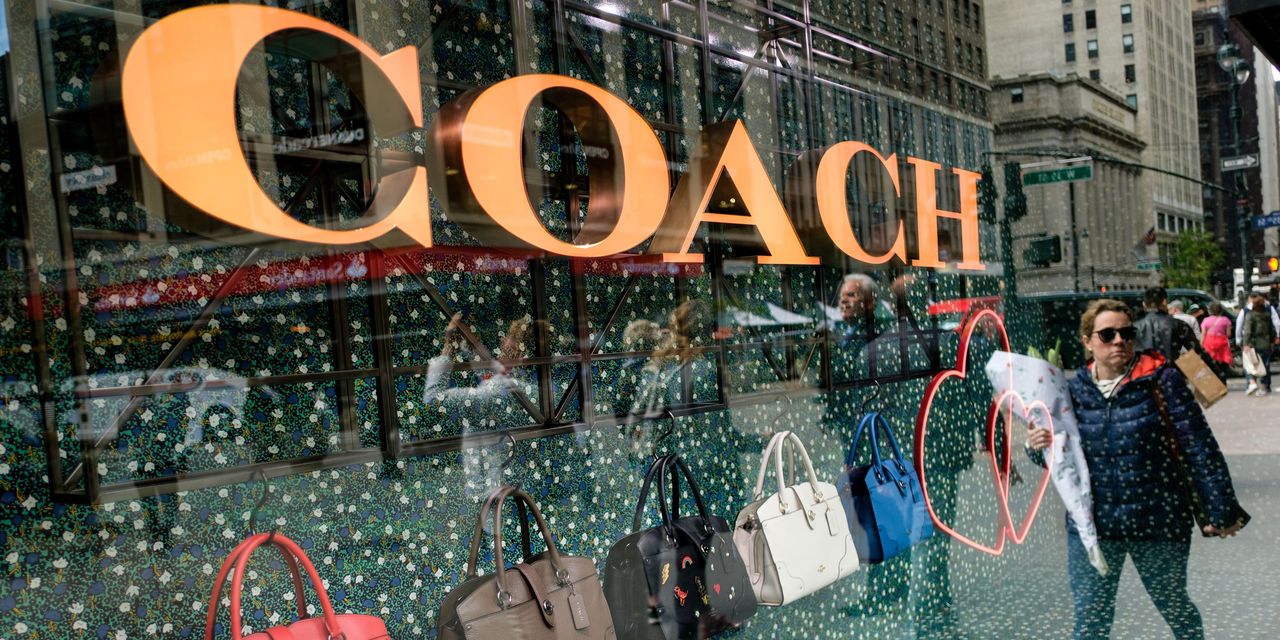

Tapestry Inc.’s stock fell 1% early Thursday after the parent of Coach, Kate Spade and Stuart Weitzman posted weaker-than-expected earnings for its fiscal fourth quarter and offered guidance that lagged estimates.
The New York-based company
TPR,
which last week announced plans to acquire Michael Kors parent company Capri Inc. for $8.5 billion, posted net income of $224 million, or 95 cents a share, for the quarter to July 1, up from $189 million, or 75 cents a share, in the year-earlier period. Sales fell to $1.619 billion from $1.625 billion a year ago.
The FactSet consensus was for earnings per share of 97 cents and sales of $1.653 billion.
Chief Executive Joanne Crevoiserat highlighted the Capri deal in the earnings release and reiterated that it would be immediately accretive to adjusted earnings.
“By bringing together six iconic brands with a heritage in design and craftsmanship, and leveraging our modern consumer engagement platform, we will drive greater innovation, consumer connectivity, and cultural relevance, creating superior value for our consumers, employees, communities, and shareholders around the world,” she said.
Capri is also parent to Versace and Jimmy Choo.
See also: Tapestry’s bond spreads widen on news of mostly debt-funded deal to buy Michael Kors parent
Tapestry said revenue grew in its international markets in fiscal 2023, including in China, despite COVID-related pressures in the first half. U.S. revenue fell 2% in the year, however, and was down 8% in the fourth quarter, weighed down by softer consumer demand in the inflationary environment.
“The environment is challenging” in North America, Crevoiserat said on the company’s earnings call.
“Aspirational” consumers, particularly in the “lower-income cohort,” are “under pressure on a relative basis and being more choiceful” with their purchases, she said.
But Chief Financial Officer Scott Roe said that the company has seen sequential improvements in North America revenue trends so far in the current quarter, and the business is now performing in line with how it did a year ago.
One category that has always proved resilient is handbags, said Crevoiserat. Coach has been leaning into the micro- and mini-handbag trend with its Studio Baguette and Mini Tabby, which resonate with millennial and Gen Z customers, a key target for the company.
“And we’re seeing it again, as we go through [an] incredibly choppy demand environment around the world, the consumer continues to engage with this category in a very strong way,” she said.
A marketing campaign for the Tabby featuring singer Lil Nas X and other young celebrities has also resonated, said Todd Kahn, CEO and brand president of Coach.
“We’re extraordinarily focused on that $300 to $500 price range. And that has created even greater white space between us and European luxury,” he told analysts. “So for us, the desire of our product, the innovation we’re bringing, the storytelling around it, all under the umbrella of expression of luxury, is working, and I believe will continue to work.”
Direct-to-consumer revenue was up 3% in the fiscal year on a constant currency basis, led by a mid-single-digit increase in stores.
Digital sales represented almost 30% of revenue in the fourth quarter, or about three times more than prepandemic levels.
The company is now expecting fiscal 2024 EPS of $4.10 to $4.15 and revenue approaching $6.9 billion. The FactSet consensus is for EPS of $4.22 and revenue of $6.9 billion.
The stock has fallen 10% in the year to date, while the S&P 500
SPX,
has gained 15%.
Read the full article here