

 English
 Français
 Deutsch
 Italiano
 Português
 Русский
 Español
 简体中文
简体中文 日本語
日本語


Unlock the Editor’s Digest for free
Roula Khalaf, Editor of the FT, selects her favourite stories in this weekly newsletter.
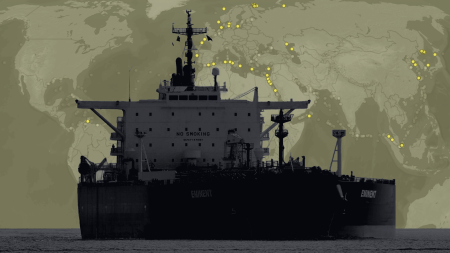
BP has become the first oil major to pause all shipments through the Red Sea, citing a “deteriorating security situation” as Yemeni rebels’ attacks on ships transiting through the key global trade route escalate.
Brent crude, the international benchmark, jumped 1.9 per cent to $77.98 a barrel on the news. The US equivalent, West Texas Intermediate, advanced 1.9 per cent to $72.82 a barrel. UK’s benchmark gas price jumped more than 8 per cent, while its European peer rose over 7 per cent, on concerns about the shipment of liquefied natural gas.
The UK oil group’s decision comes as Iran-backed Houthi rebels have intensified their campaign against ships passing through the Suez Canal following the outbreak of the Israel-Hamas war. It raises the prospect of a prolonged disruption of a passage that handles about a tenth of global trade.
“We will keep this precautionary pause under ongoing review, subject to circumstances as they evolve in the region,” BP said in a statement on Monday.
Shares in some of the biggest shipping companies also climbed on Monday, extending gains from last week as investors expect disruptions will cause freight rates to rise, boosting earnings.
AP Møller-Mærsk, which operates the world’s second-largest container shipping fleet, rose 1.9 per cent, while Hapag-Lloyd, the world’s fifth-largest, rose 7.9 per cent. Both companies last week also paused transits through the Red Sea because of the threat of attacks.
Longer routes as ships sail around Africa could in turn delay the delivery of commodities such as consumer goods and oil between Europe and Asia.
The price of oil could jump “at least” $10-$15 for Brent crude if all shipments from the Middle East to Europe avoided the Red Sea and travel around Africa, while prices for TTF, Europe’s main gas trading benchmark, could rise 25-30 per cent, said Henning Gloystein, a director at consultancy Eurasia Group.
“BP is the first global portfolio player to [pause shipments],” Gloystein said. “[It will be] crucial to see now how strong the US and European naval task force response is.”
LNG flows through the Red Sea accounted for around 8 per cent of global trade in the first half of this year, according to the US Energy Information Administration.
BP’s statement came hours after the UK’s maritime authority said it had received reports of “incidents” in the Red Sea and advised vessels to proceed in the region with “caution”.
Read the full article here