


 English
 Français
 Deutsch
 Italiano
 Português
 Русский
 Español
 简体中文
简体中文 日本語
日本語

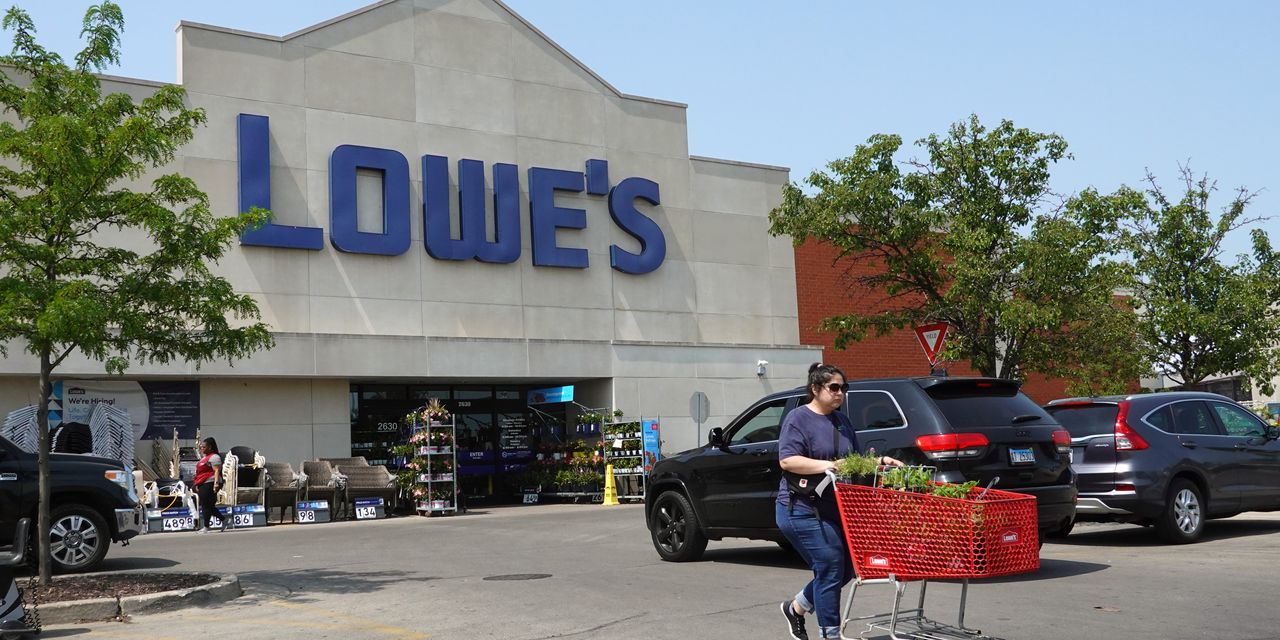

Home-improvement retailer
Lowe’s
beat earnings expectations in the second quarter and stuck to its full-year guidance, citing a strong spring recovery.
The company reported earnings per share of $4.56 in the quarter, beating
FactSet
expectations for $4.47 per share. Revenue of $25 billion was in line with analysts’ estimates.
Comparable sales fell 1.6% for the period, better than the 2.6% drop expected by analysts polled by FactSet.
This is breaking news. Read a preview of Lowe’s earnings below and check back for more analysis soon
Home Depot’s
better-than-feared earnings gave investors hope that the home improvement sector’s challenges may be ending soon. That doesn’t mean results from
Lowe’s,
due Tuesday morning, will be pretty.
Last week, Home Depot (ticker: HD) topped earnings expectations and reiterated its fiscal year financial forecasts, leading to a flurry of increases to targets for the stock price.
“Home Depot’s solid 2Q beat raises hopes that the worst of 2023’s Home Improvement downturn is behind us,” wrote Evercore ISI analyst Greg Melich in a note following the results.
Foot traffic seems to back up Melich’s assertion. Visits to Lowe’s (LOW) and Home Depot are down compared with last year, but have improved over the summer, according to data from Placer.ai.
But a better outlook for home improvement in the latter half of the year doesn’t affect the second-quarter results Lowe’s is about to report.
Indeed, most analysts lowered their earnings estimates for Lowes’ second quarter after the company cut its forecasts in May. Uncertainty about the home- improvement sector, exacerbated by comments from Home Depot last Tuesday suggesting shoppers are still wary of spending on big-ticket items, prompted a few more cuts in recent weeks.
The Street is now expecting Lowe’s to deliver adjusted earnings of $4.47 a share, compared with the consensus call for $4.49 at the end of July. Revenue estimates for $25 billion have remained largely unchanged.
The home improvement sector has been under pressure from a lack of activity in the housing market. Higher mortgage rates are sidelining potential buyers, and are also cutting into the renovation projects that often take place following the purchase of a house. Tack on inflation and an unseasonably cold spring, and even interest in do-it-yourself projects has weakened.
That is especially troubling for Lowe’s because DIY makes up roughly 75% of its revenue. Indeed, Home Depot’s strength this quarter came from improvements in West Coast sales, as well as sales to professional builders, two areas where Lowe’s has less exposure, Melich wrote. About half of Home Depot’s annual sales come from its Pro business. Lowe’s derives about a quarter from contractors.
To be sure, Lowe’s has been carving out its own business serving contractors, as well as expanding its customer base into new demographic groups, including rural communities. Early signs suggest the investments are working, as Barron’s previously reported.
In 2019, Pro sales made up 19% of annual sales, compared with the current roughly 25%. And although Lowe’s foot traffic lagged behind Home Depot’s from March to June, it caught up in July, according to Placer.ai.
Lowe’s stock closed 0.8% lower on Monday. The shares have gained 9.2% this year, ahead of Home Depot’s 2.6% rise, but underperforming the
broader market.
Write to Sabrina Escobar at [email protected]
Read the full article here