


 English
 Français
 Deutsch
 Italiano
 Português
 Русский
 Español
 简体中文
简体中文 日本語
日本語


Survey Monday
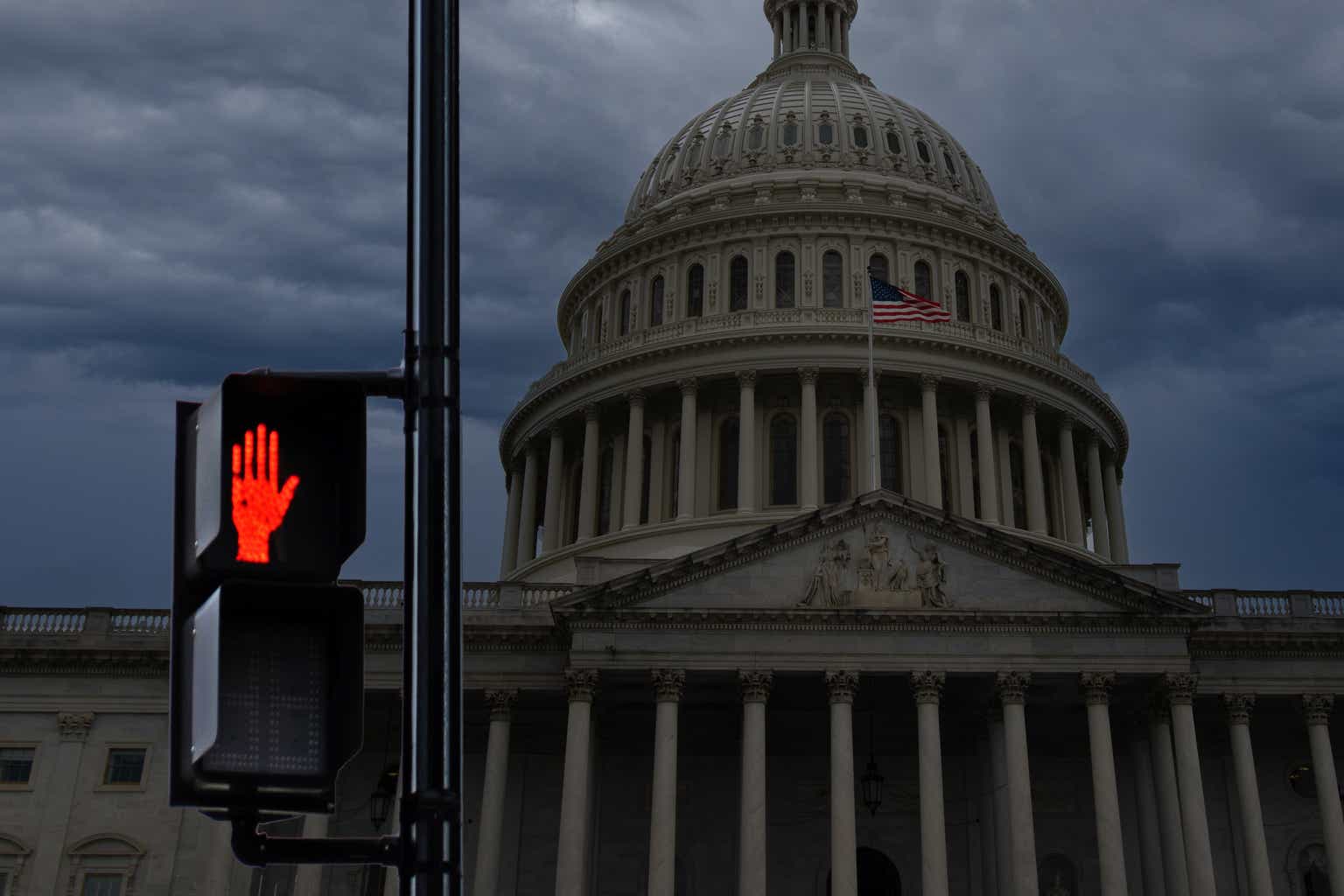
Is the federal government headed for a shutdown on Oct. 1?
· Yes
· No
Take the survey here and don’t forget to share your thoughts in the WSB comments section.
Need more info? Come back to the survey after reading the top story below.
Deadlock continues
The budgetary standoff in the U.S. doesn’t look like it will abate soon, raising the likelihood of the first government shutdown since 2019, as hardline Republicans continue to hold off on agreeing to a stopgap spending bill. Current funding for federal operations will end on October 1. If Congress fails to reach a spending deal by then, thousands of federal workers will be furloughed without pay.
Republicans divided: House of Representatives Speaker Kevin McCarthy is expected to push an ambitious plan this week, seeking approval of four large bills that include military and homeland security funding. The aim is to convince far-right Republicans to support a stopgap spending bill, also called a continuing resolution. Hardline Republicans want much deeper spending cuts than what was previously agreed upon, calling for about $120B in additional cuts for the new fiscal year alone. But U.S. President Joe Biden said the deal reached in June would’ve cut the budget deficit by $1T over the next 10 years. “Now a small group of extreme Republicans don’t want to live up to the deal,” he said. Meanwhile, Republican Representative Tony Gonzalez pushed back on McCarthy’s stopgap proposal, saying it doesn’t solve the problem.
Wider impact: Most experts believe the government shutdown will be temporary, and its wider impact will likely be limited. According to Morgan Stanley, the last 20 government shutdowns that occurred since 1976 “appear to have had limited impact on the economy.” As for bond prices, a shutdown may cause some “temporary instability”, but this is not a given.
Brian Levitt, global market strategist at Invesco, expects the spending bills to pass without incident, given that past shutdowns tended to resolve quickly with minimal impact. SA analyst Justin Purohit also expects a last-minute deal, although the process will likely be messy. “Though contentious, past standoffs have always proved temporary, with little lasting impact on U.S. equity markets,” he concluded. Take the WSB survey. (5 comments)
Win for writers
The Writers Guild of America and Hollywood studios reached a tentative agreement Sunday night that sets the stage to end a strike that has been going on since May. The writers’ union said in a letter to its members that an agreement in principle had been reached on all key points. The final contract language still needs to be firmed up with the Alliance of Motion Picture and Television Producers, which represents major studios including Amazon (AMZN), Disney (DIS), Netflix (NFLX) and Warner Bros. Discovery (WBD). After that, the Guild’s leadership and members need to vote on the deal. The tentative deal doesn’t directly impact the ongoing actors’ strike. (13 comments)
Over to Detroit
While progress has been made in Hollywood, Detroit automakers are still at loggerheads with union workers. The United Auto Workers walkout ratcheted up a level after the union added 38 General Motors (GM) and Stellantis (STLA) locations. UAW President Shawn Fain said talks with Ford (F) saw “real progress”, but negotiations with Stellantis and GM remain problematic. Ford noted that there were “significant gaps to close.” S&P Global Mobility believes the UAW is ensuring it still has leverage by holding off striking at vehicle, engine and components facilities. The White House is widely expected to step in, with President Joe Biden arriving in Detroit tomorrow to “stand in solidarity with the UAW,” he said. (164 comments)
Dodging sanctions
Russia appears to have succeeded in avoiding G7 sanctions on most of its oil exports, as Russia’s oil revenues may total at least $15B more in 2023 than they would’ve previously. This is a result of higher crude prices and a lower discount on Russia’s own oil. Nearly 75% of all seaborne Russian crude flows traveled without western insurance in August, implying that Russia has become adept at circumventing the G7’s $60/bbl oil price cap. Enforcement concerns have been mounting in the West over the price cap, with Russian Urals crude (URDB:COM) trading above $60 since July. While Russia’s oil sector still faces issues including a tight diesel supply, the latest trading figures suggest more oil revenues will be flowing into Vladimir Putin’s war chest. (16 comments)
Read the full article here